LIR Manager
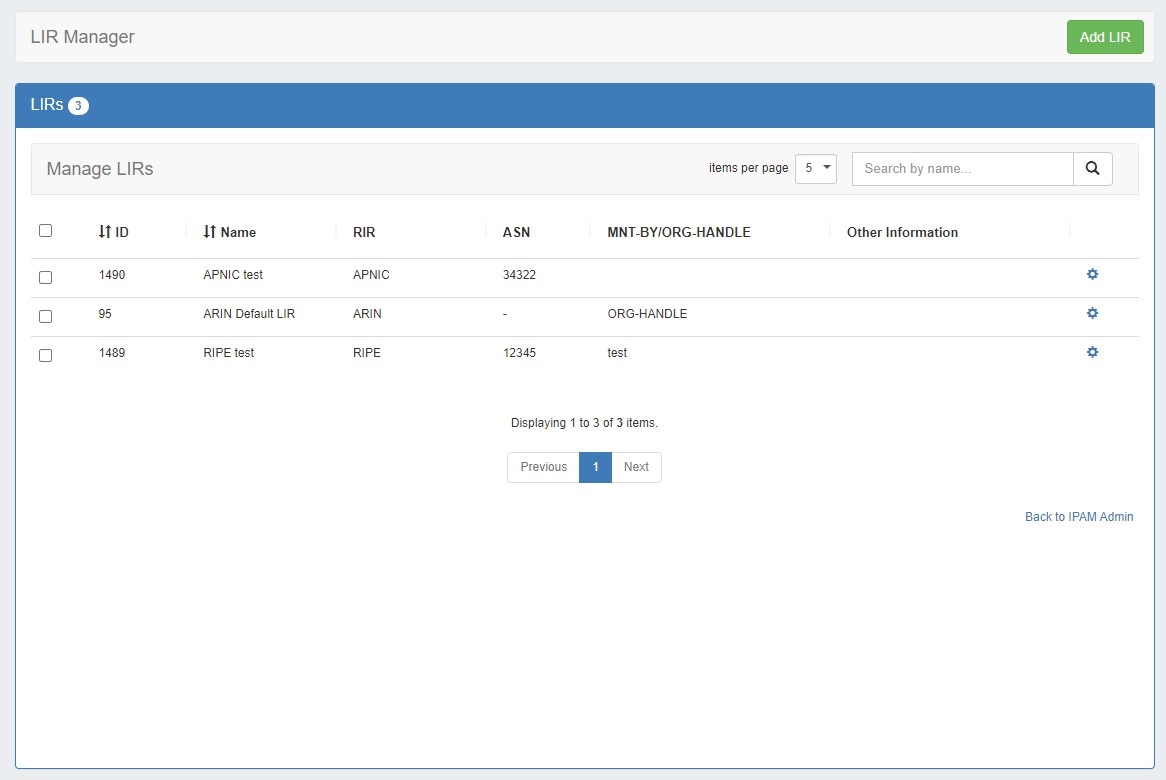
ProVision supports multiple LIRs (Local Internet Registries) in a single instance. This means that you have the ability to update SWIP/RPSL functions for a given allocation with the LIR information that you wish.
LIR Setup and Use
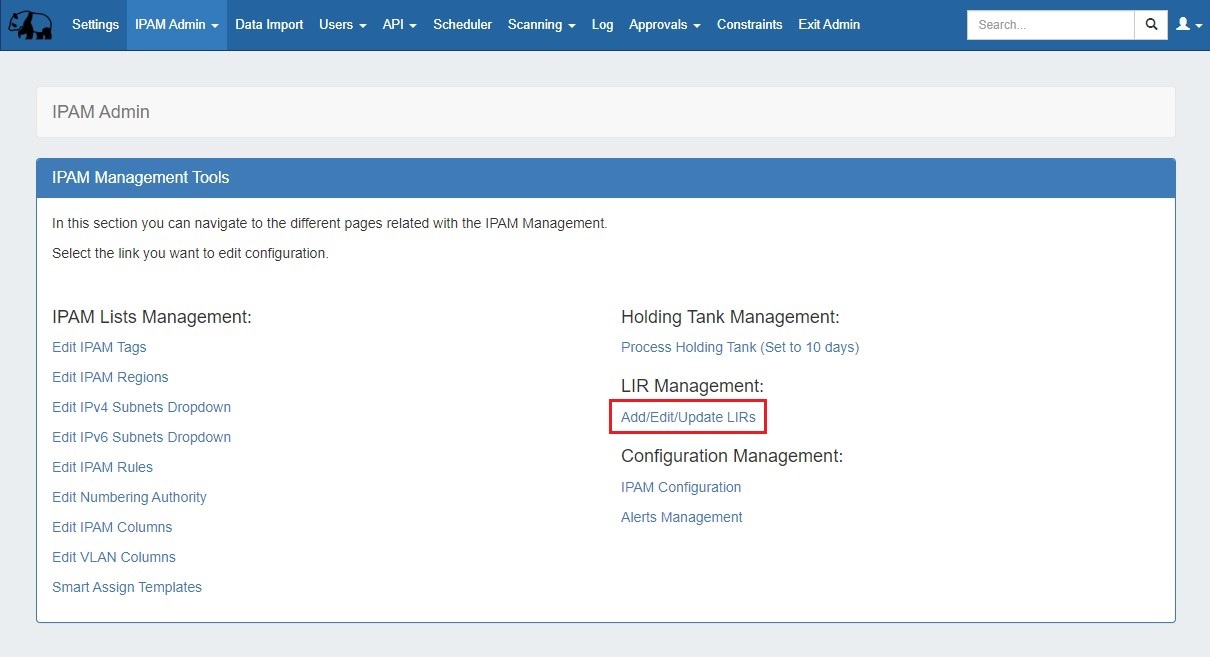
The LIR Manager is available from the IPAM Admin page. In the Admin section, select the IPAM Admin tab, then "LIR Management: Add / Edit / Update LIRs".
You will be taken to the LIR Manager page, showing your current LIRs.
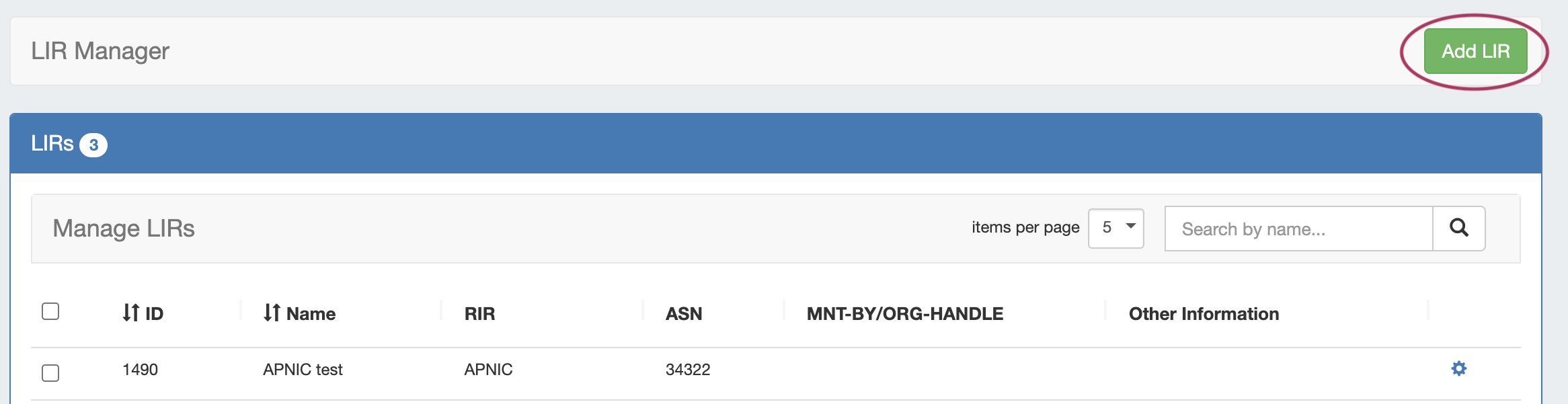
You may Add LIRs from the top of the page, and edit or delete the individual LIRS by hitting the Action Menu (gear icon).
Add a LIR
After clicking on the Add LIR button, you can setup the required data for the specific RIR/LIR combination:
ARIN
Adding a new LIR with ARIN selected for RIR will bring up the following fields.
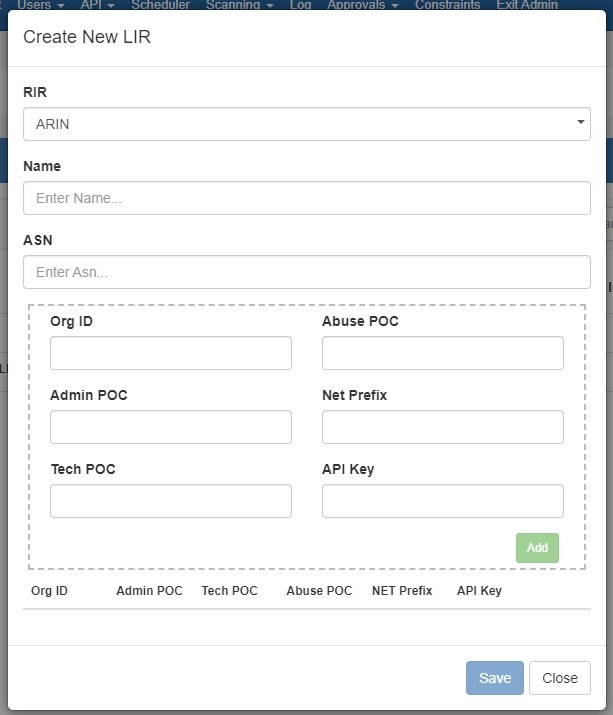
Enter the Name, ASN, ORG ID, POC information, NET Name Prefix, and API Key. Additional Orgs may be added by selecting the "Add Org" button.
Be sure to click the "Save" button when done to save your changes.
Remember to SAVE!
RIPE
RIPE Integration Authentication
All ProVision RIPE LIR connectors must be created (or recreated) using RIPE API key credentials.
Deprecation of RIPE MD5 Hashed Passwords:
RIPE MD5 hashed passwords (used in ProVision v8.3.0 and earlier) are deprecated and have been removed as of January 2026, and replaced with API Key based authentication.
Users must generate a RIPE API key associated with their NCC account as described at https://docs.db.ripe.net/Authorisation/Using-the-Authorisation-Methods#api-keys:
To create an API key, login to Webupdates using RIPE NCC Access and choose API keys from the left-hand menu. Then click Create an API Key. When the key is created you will see a popup. You must copy the API key details as they will only be shown once. Store the copied credential securely.
Before using an API key, you must add your RIPE NCC Access account to a maintainer using an auth: SSO attribute.
Create a RIPE API Key:
RIPE API Key credentials are needed to create RIPE LIRs in ProVision.
If you do not already have a RIPE API Database Key, create one by following the instructions provided by RIPE under Create a New Database Key:
Before authenticating with an API key, your RIPE NCC Access account must already be associated with the object mntner using an "auth:" SSO attribute.
To start using API keys, go to the Web query page, login to RIPE NCC Access, and go to the API keys page on the left-hand menu. https://apps.db.ripe.net/db-web-ui/api-keys
Create a New Database Key
On the API keys page, click on "Create a new Database key".
- Enter a key name (required) : a short description of how the key will be used.
- Enter an expiration date (required) : when does the API key stop working. Keys are time-limited for security reasons and are valid up to a year in the future.
- Enter a maintainer (optional) : if you have added your RIPE NCC Access account to more than one maintainer, you can restrict the API key to only work with one specified maintainer.
Then click on "Create a key".
When the key is created you'll see a popup.
The API key is composed of two parts. You can either use it combined in a single HTTP Authorization header, or separately as a username and password using your HTTP client.
Make sure to copy down either the combined header value or the username and password. The password will only be shown to you once. The username will be used subsequently as the key id.
ProVision users should copy the "Username" and "Password" generated for the API Database Key, and save them in a secure location.
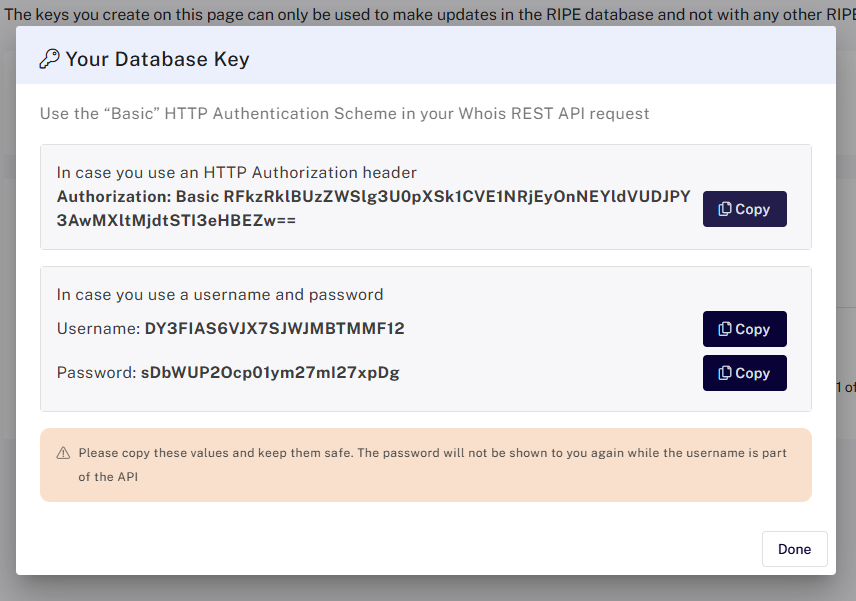
The RIPE API Username and Password are required when creating or editing a RIPE LIR.
Create New RIPE LIR
Adding a new LIR with RIPE selected for RIR will bring up the following fields:
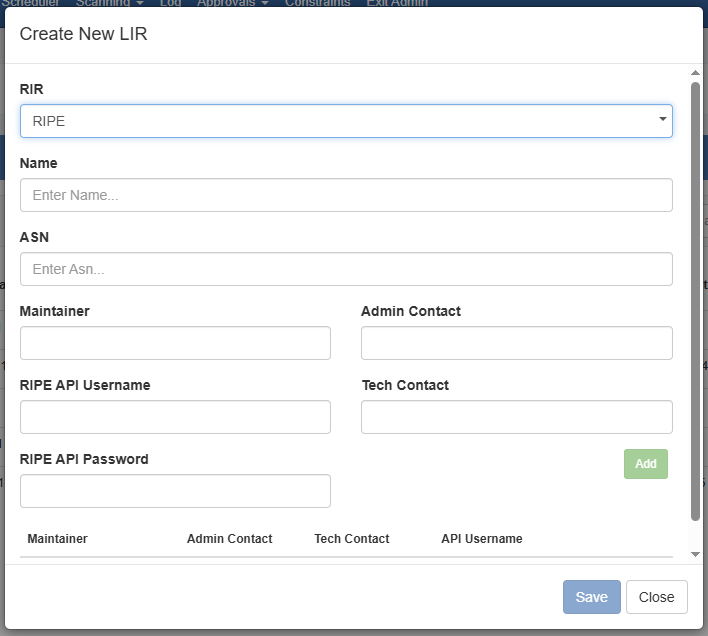
Enter the Name, ASN, Maintainer, RIPE API Username/Password, and Contact(s) information. Additional Maintainers may be added by selecting the "Add Maintainer" button.
Be sure to click the "Save" button when done to save your changes.
Remember to SAVE!
Edit a LIR
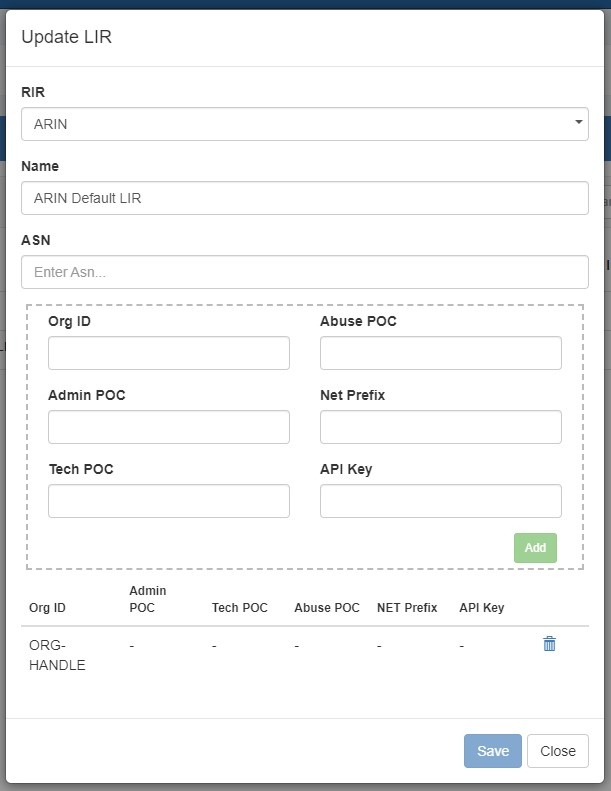
Edit a LIR by clicking on the Action Menu (gear icon) next to the entry in the LIR Manager.
The Update LIR dialog will open. From here, you can edit RIR, Name, ASN, and Org information, as well as add / delete Orgs.
Delete LIR(s)
Delete a single LIR by clicking on the Action Menu (gear icon) next to the entry in the LIR Manager, and select "Delete".
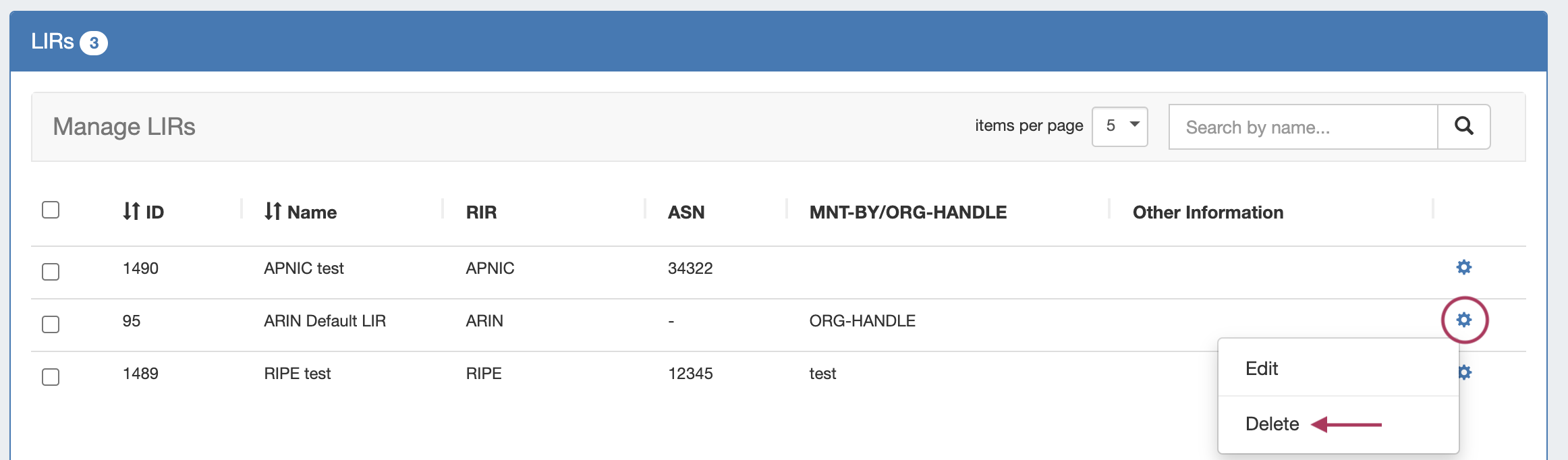
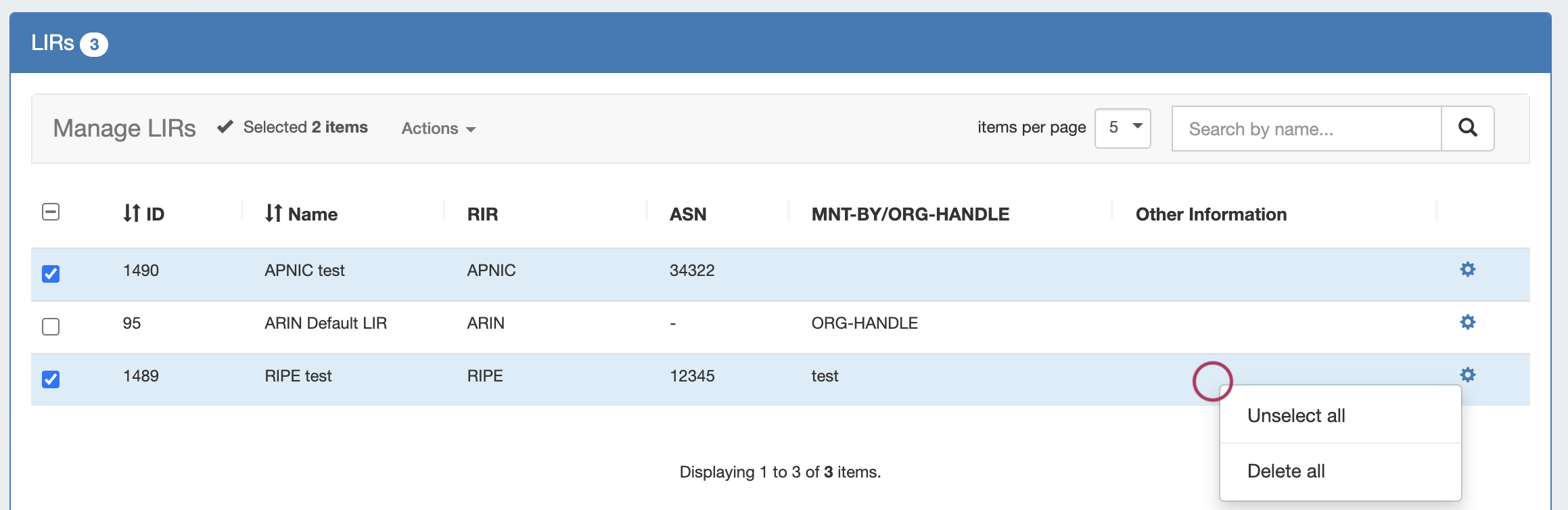
Delete multiple LIRs by clicking the checkboxes next to the desired LIRs to delete. Then, under "Actions" at the top of the page, select "Delete All".

You may also right click anywhere on the selected rows to open the multi-select context menu, where you may choose "Unselect All" or "Delete All".
RIR Integration
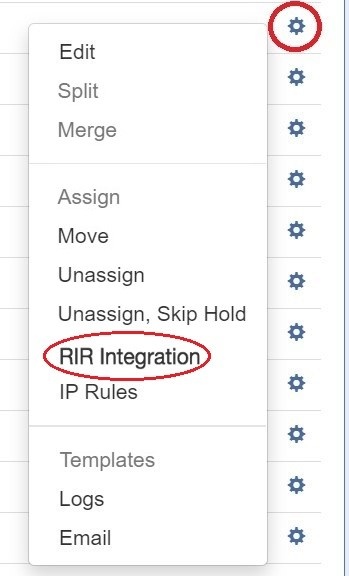
Once these have been configured, you will be able to use the RIR integration feature from the Action Menu on the IPAM Manage screen or IPAM Gadget:
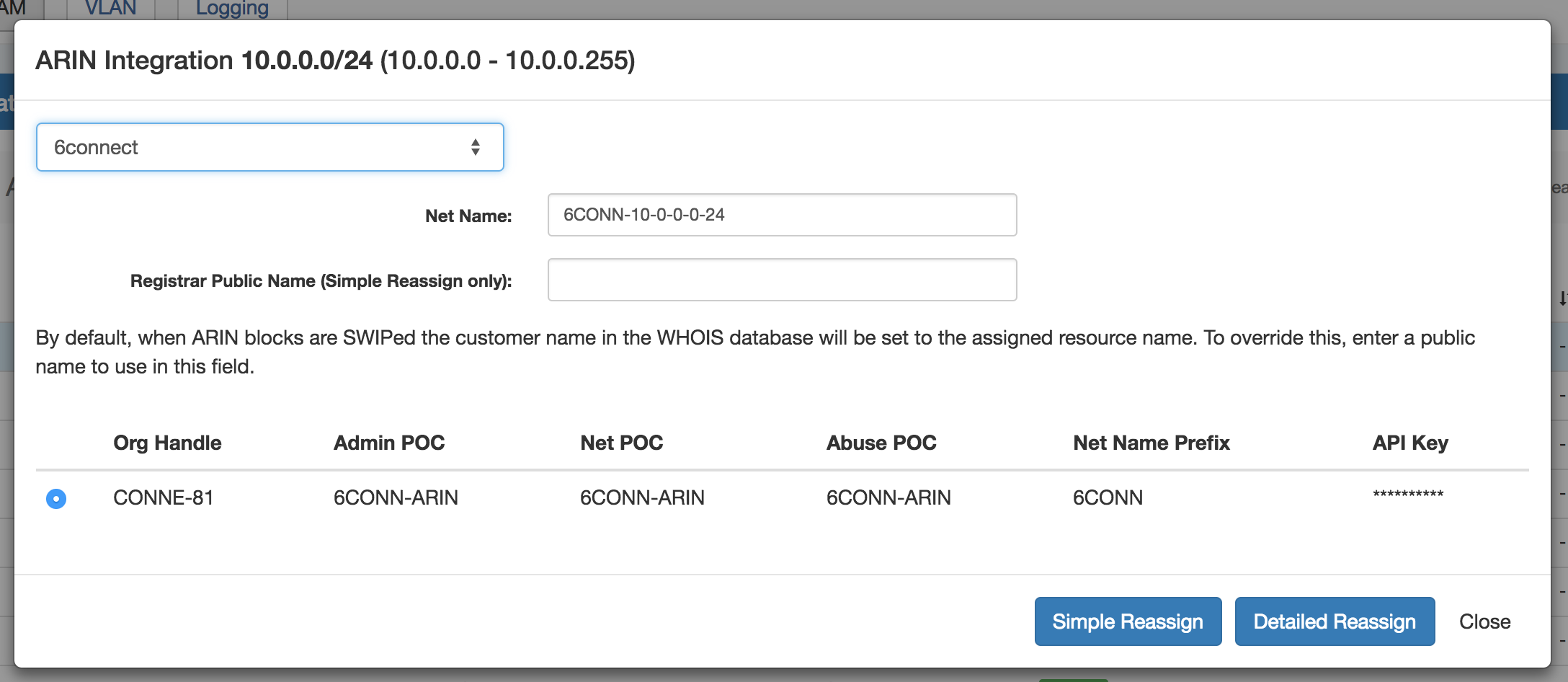
RIR specific options will pop up (see ARIN example below) and give the options for "Simple Reassign", "Detailed Reassign", or "Close" to exit.
Additional Information
For additional detail, continue on to: